
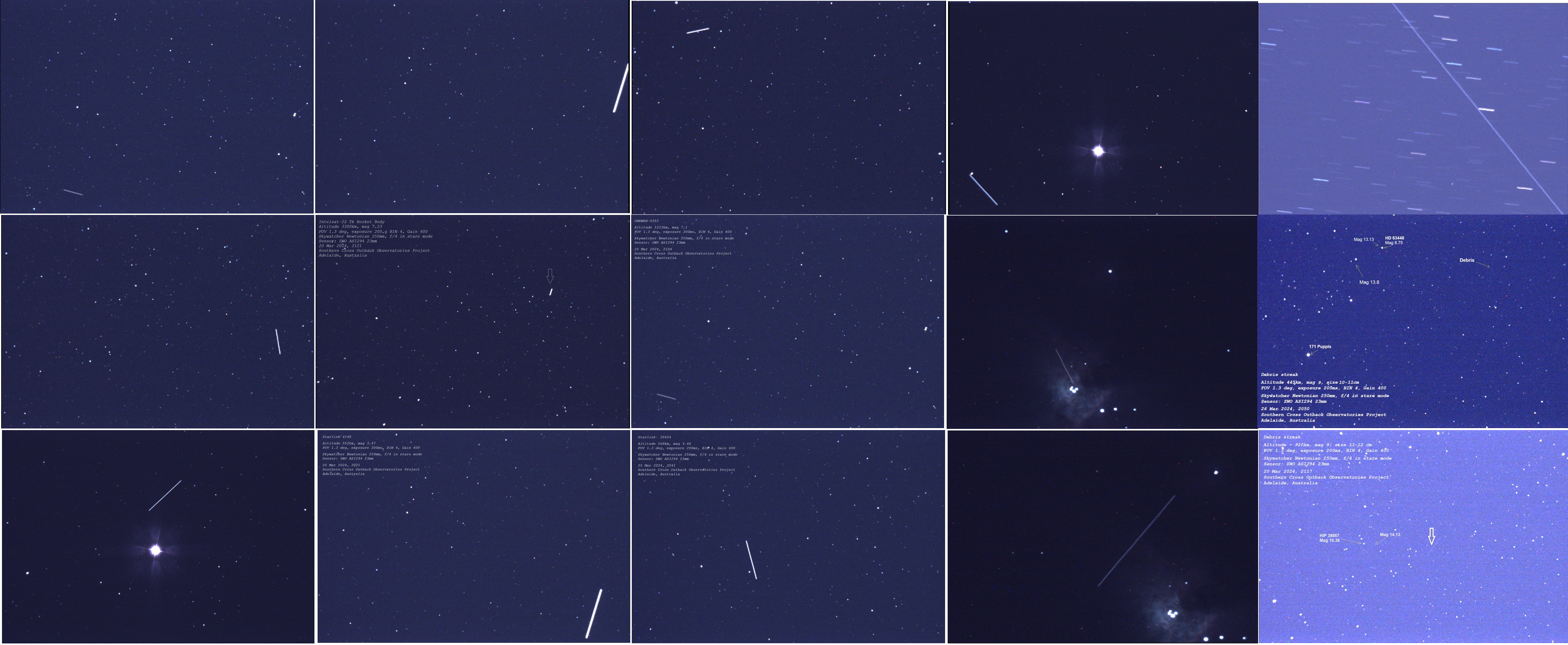
Find the faint streak
Small debris can be difficult to observe and catalogue. SCOOP is developing optical detection techniques focused on the challenging 1–10 cm range.

Innovation in space debris detection and mitigation
Mobile observatories in the Australian outback, developed for a new approach to observing small objects in low Earth orbit.
Space situational awareness brings observations together to identify objects, estimate their paths and assess risks to spacecraft. Ground-based radar and optical telescopes help build and maintain that picture. Learn about space surveillance and tracking at ESA ↗
Small debris can be difficult to observe and catalogue. SCOOP is developing optical detection techniques focused on the challenging 1–10 cm range.
Repeated observations from synchronized sites can help refine position and trajectory estimates. SCOOP’s proposed network uses mobile observatories under dark outback skies.
More precise tracking could support collision-risk assessment and, in the longer term, active debris removal. This is the aim of SCOOP’s patented Trace, Track and Tackle sequence.
SCOOP’s technology goals and prototype work are described in its patent announcement and 2026 award story.
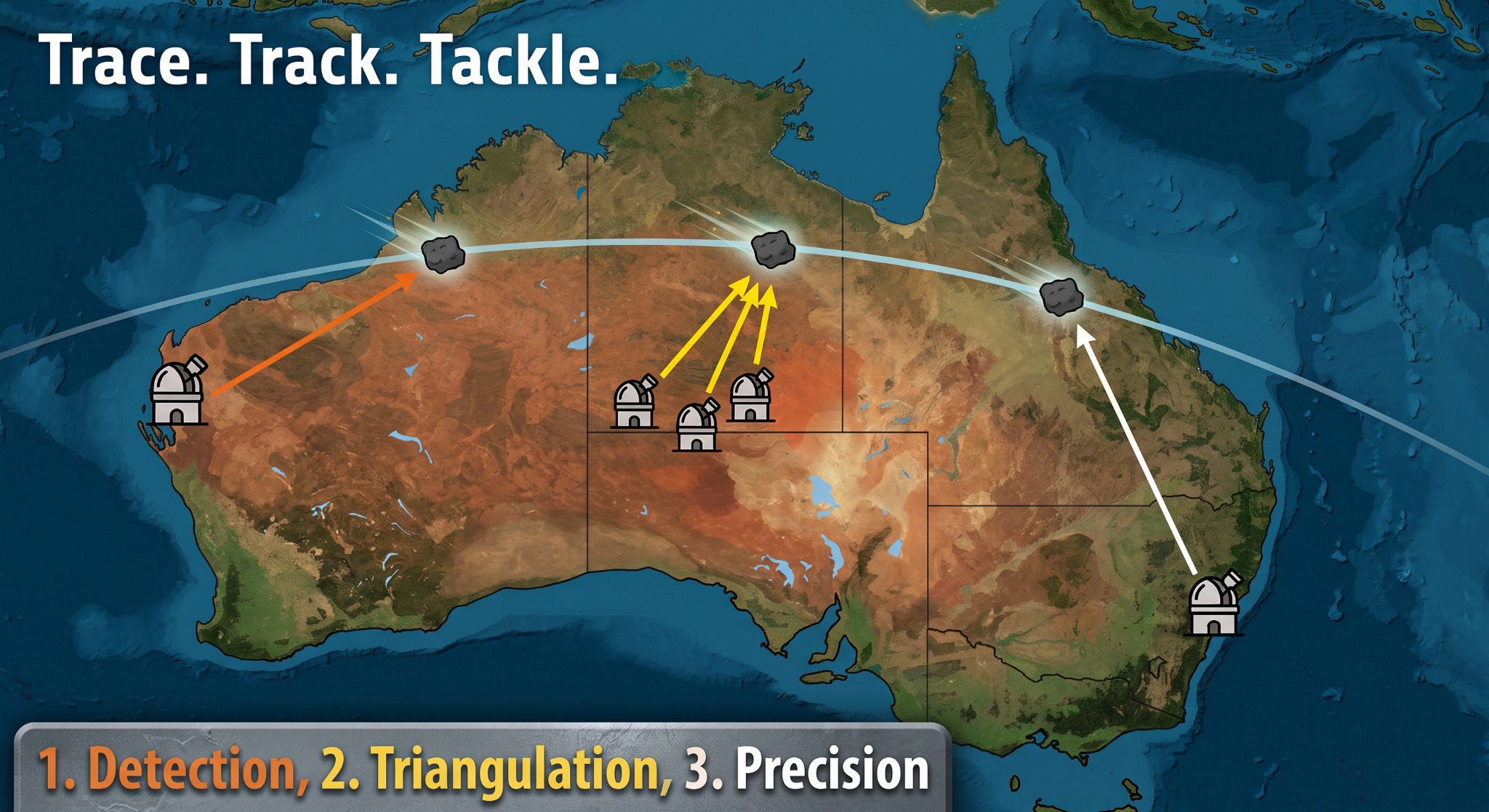
Space is getting congested. And with it comes an inherent problem of space debris, putting at risk the orbital space infrastructure the very fabric of our modern society is reliant upon. Uncontrolled, undetected, uncatalogued, and travelling at several kilometers per second, the 1-10 cm sized space debris in the Low Earth Orbit (LEO) numbers over a million and threatens the largest proportion of our orbital asset. And this threat is not going away any time soon unless a serious effort is made to develop newer technologies of detection and cataloguing at the highest level of precision enabling ground-based or orbital Active Debris Removal (ADR) at a massive scale. We believe a synchronized network of mobile observatories deployed over a vast area such as the Australian outback will be able to detect the faintest of the debris in LEO through a concerted sequence of detecting, tracing and tracking to achieve hyper-precision in the Two Line Elements of the debris enabling their removal from the orbit. Our patent-pending Trace, Track and Tackle sequence is a modern solution for the space debris problem which will be swift, cost-effective and reliable method of the removal of space debris at a massive scale.
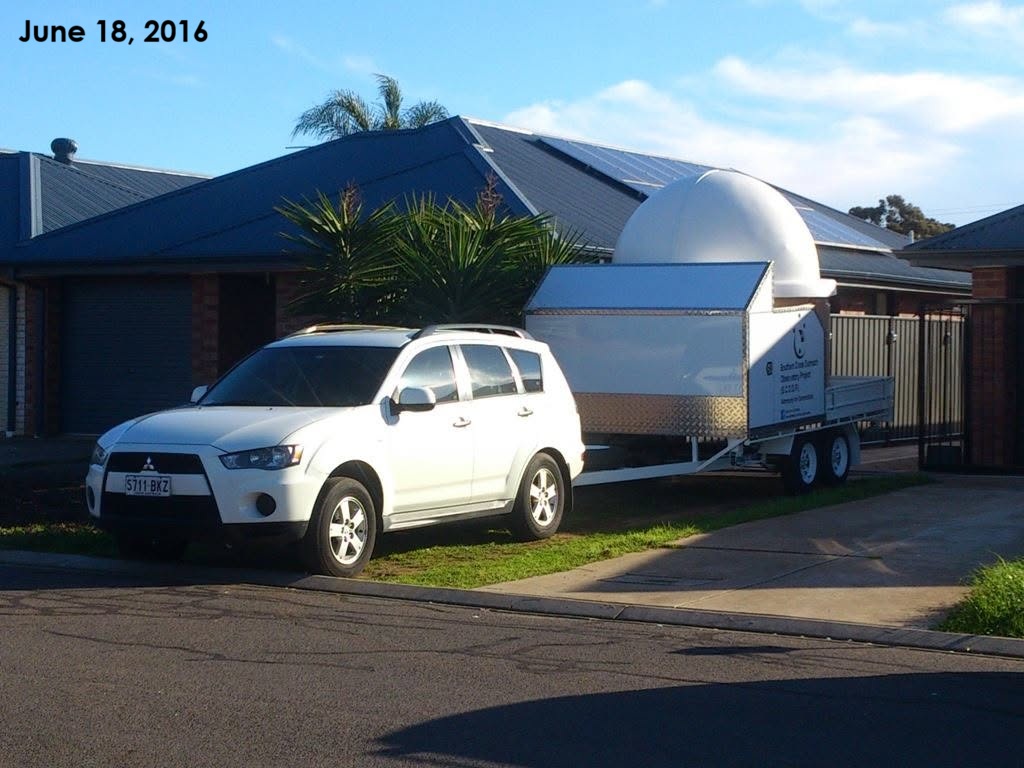
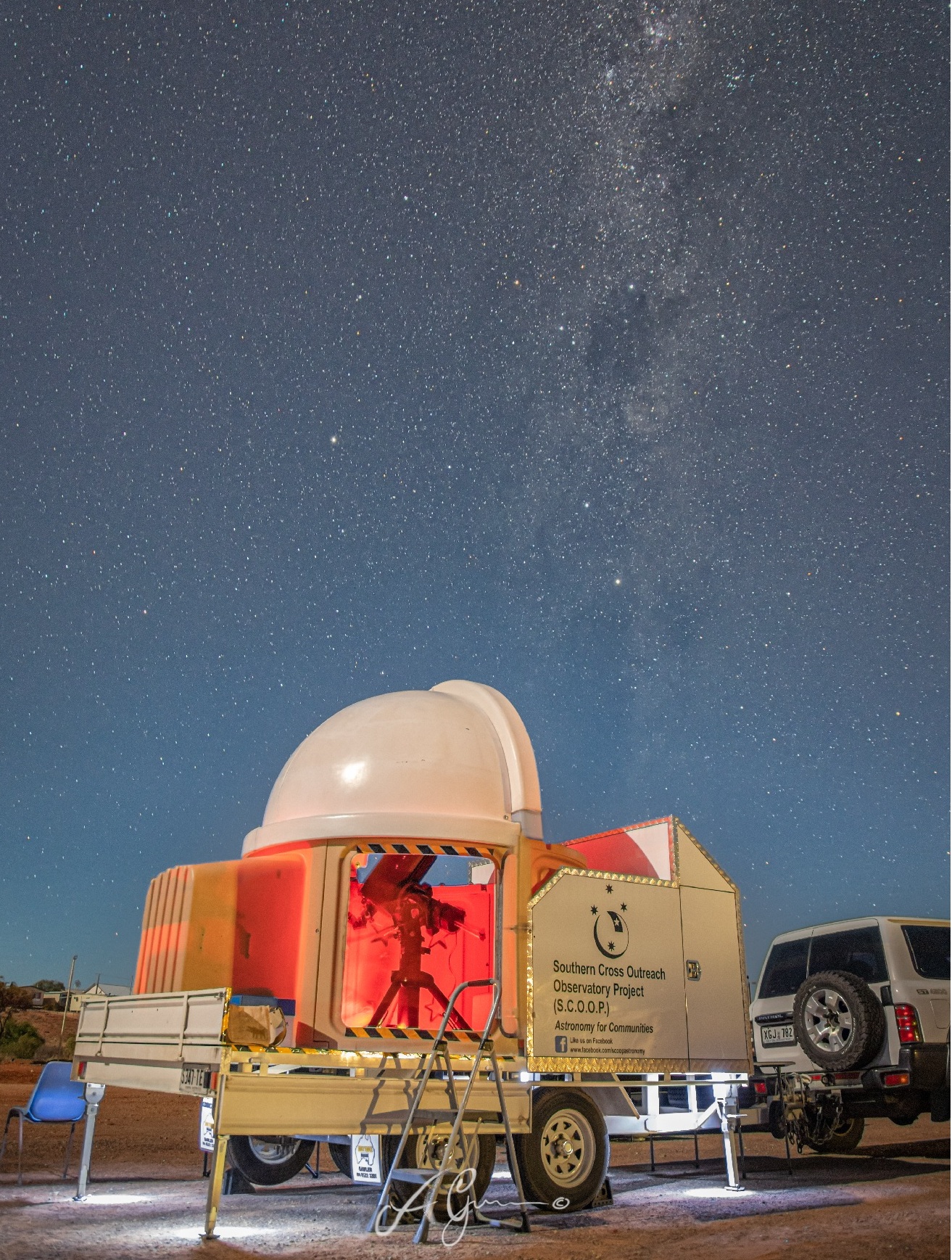
Watch the mobile observatory travel to bring astronomy to communities beyond the city. Its years on the road helped shape the next phase of SCOOP.
Explore the timeline →

Recognition for SCOOP’s space situational awareness work and its contribution to Australia’s space industry.
Read the story →

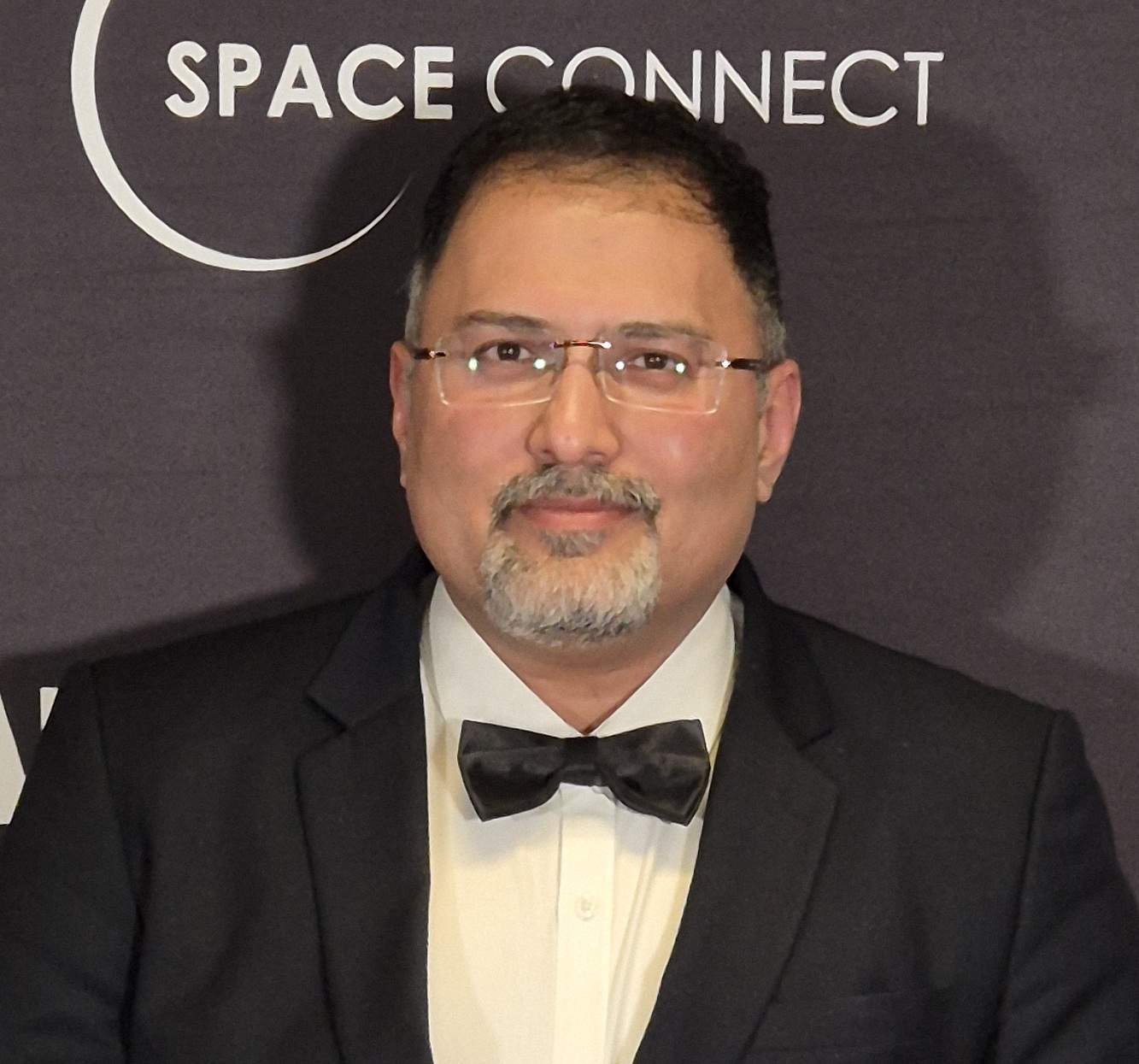
A graduate in Astronomy from Swinburne University. He conceived a network of mobile observatories to help detect and mitigate untracked debris in low Earth orbit.

Technology entrepreneur in AI, big data, image processing, information security and financial technology. President of the Karachi Astronomers Society.
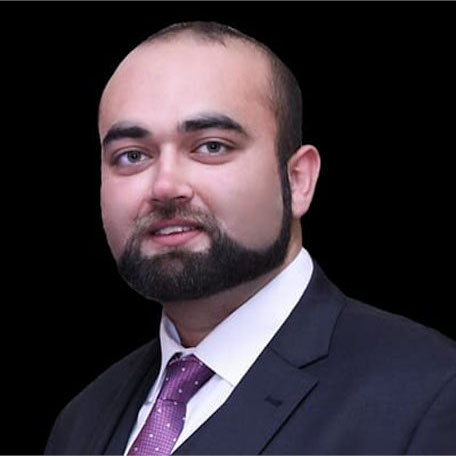
Experienced in deep space astrophotography, telescopes, prototype design, fabrication and CNC machining.

Doctoral researcher in control systems, robotics and machine learning at Ruhr University Bochum.